The Business of Longevity:

Can Health Become India's Next Luxury Market:
For decades, Indian healthcare was sold as a repair business. You fell ill, entered a hospital, paid the bill, recovered, and returned to life. The new luxury market is built on a more seductive promise: never reaching the hospital in the first place.
Longevity is no longer just a Silicon Valley obsession dressed in cold plunges, blood tests, and biological-age dashboards. Globally, the wealthy are turning “healthspan” into a status symbol — not merely living longer, but staying sharper, fitter, and visibly younger for longer. Bloomberg Businessweek has already traced how elite longevity clubs now sell extensive testing, concierge doctors, oxygen-capacity analysis, brain scans, supplements, and personalised protocols to clients willing to pay for biological control.
India is arriving late, but not quietly.
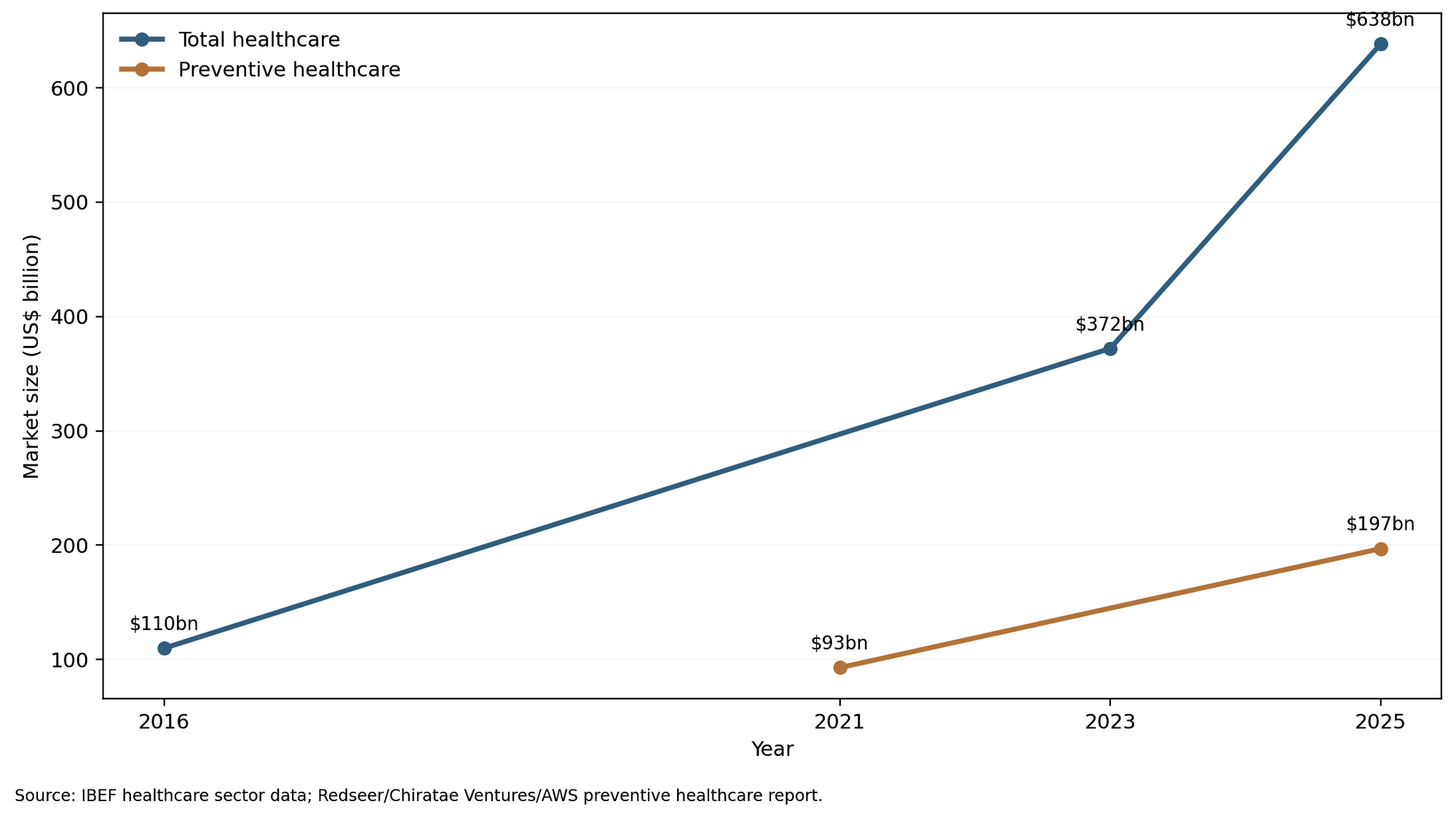
The timing is commercially perfect. India’s healthcare sector was projected by IBEF to reach $638 billion by 2025, while healthcare spending is expected to rise from 3.3% of GDP in 2022 to 5% by 2030. More importantly, the country’s preventive healthcare market was projected to reach $197 billion by 2025, growing at a 22% CAGR, covering fitness, wellness, supplements, early diagnostics and health tracking. This is not a wellness fad. It is a consumption shift.
The Indian upper class has already exhausted the old markers of aspiration: imported cars, luxury watches, business-class travel, branded residences. The next premium signal may be invisible — lower inflammation, cleaner bloodwork, better sleep scores, sharper glucose response, longer youth. Health is becoming the new watch collection: private, measurable, expensive, and deeply status-driven.
The business models are beginning to form. Biopeak, a longevity startup backed by investors including Ranjan Pai’s Claypond Capital, Accel’s Prashanth Prakash and Rainmatter, raised $3 million and launched a clinic in Bengaluru, offering diagnostics, AI-led preventive care and concierge-style health optimisation. In January 2026, Nikhil Kamath invested another $2.7 million in Biopeak through NKSquared, signalling that India’s financial elite is beginning to see longevity not as vanity, but as an investable category.
The broader healthcare stack is moving in the same direction. India’s diagnostics market is shifting from symptom-led testing to preventive and precision testing, with preventive health testing reportedly growing 30% year-on-year in 2025, and lifestyle and gut-health diagnostics rising 47%. Plum has committed ₹200 crore to Plum Health, combining diagnostics, teleconsultations and AI-powered health tracking for working professionals. Luxury hospitality is also entering the game: Oberoi’s “Asmi” wellness programme blends movement, nutrition, bodywork, breath work and mindfulness into a premium hospitality product.
But India’s longevity market has one problem: trust. The affluent Indian consumer will pay for a Rolex because the signal is clear. They will pay for a hospital because the crisis is clear. Longevity sits awkwardly between the two. It sells prevention, probability, and delayed gratification. A ₹2 lakh longevity programme must prove why it is not just an expensive health check-up wrapped in Silicon Valley vocabulary.
That is where the profit opportunity lies. The winners will not be those who shout “anti-ageing” the loudest. They will be the brands that combine clinical credibility, premium experience, Indian cultural trust, measurable outcomes, and recurring subscription economics.
India does not need another wellness influencer. It needs a new category: health as managed wealth. Because for the country’s rising elite, the next luxury may not be what they wear, drive, or own.
It may be how long they can remain powerful enough to enjoy it.
